


PRODUCTS
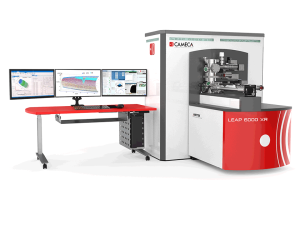
LEAP 6000 XR
Atom Probe Tomography (APT) is the only material analysis technique offering extensive capabilities for both 3D imaging and chemical composition measurements at the atomic scale (around 0.1-0.3nm resolution in depth and 0.3-0.5nm laterally). Since its early developments, APT has contributed to major advances in materials science.
The first 3D Atom Probe with combined voltage & laser pulsed operation
The LEAP 6000 XR™ inherits key features from previous APT generations, adding deep UV laser pulsing to the proven local electrode design to deliver higher yield and data quality. Through compatibility with the microtip array and a redesigned optical system, the LEAP 6000 XR provides enhanced ease of use and the potential for fully automated operation.


Flow Powder Charecterization
Granutools improves powder understanding by delivering leading edge physical characterization tools
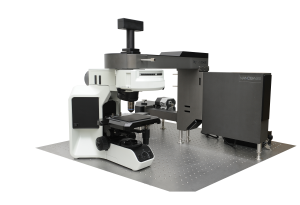
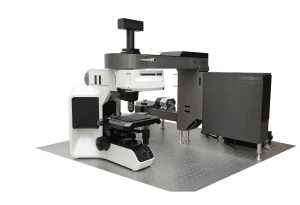
Raman Microscopy
NANOBASE provides the total solutions for Raman spectroscopy research. XPER MAKES YOUR RAMAN DREAMS COME TRUE

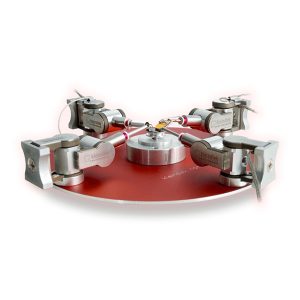
NanoWorkstation
Adds the ‘hand’ function to the electron microscope to allow physical manipulation and characterization at the micro- and nanoscale.
The module-based system offers high versatility, giving you the flexibility to perform numerous different specialized applications by simply changing the tool attached to the front of the manipulator, whether it is moving, assembling, preparing, rotating, pushing, probing, feeling, listening, gripping or any other task you can imagine.

Probe Workstations
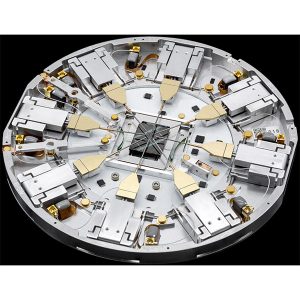
The most compact and highly integrated nanoprobing system in the market. With positional encoders on the platform, enables fast and efficient nanoprobing workflows.
Kleindiek Nanotechnik is dedicated to providing you with sophisticated and easy to use tools for performing electrical characterization experiments and in-situ failure analysis with high precision and fast through-put.

Light Sheet Microscope Alpha3
Light sheet fluorescence microscopy (LSFM) uses a thin sheet of laser light to excite only fluorophores within the focal volume. Light sheet microscopes (LSMs) have a true optical sectioning capability and, hence, provide axial resolution, restrict photobleaching and phototoxicity to a fraction of the sample and use cameras to record tens to thousands of images per second.

SZ range
Greenough optical system that delivers excellent flatness. High color fidelity and antistatic materials and coatings make these stereo microscopes suitable for routine or advanced life science applications.


MVX10
A macro zoom microscope from Olympus offers a large-diameter, single-zoom optical path optimized for extremely high resolution at broad magnification zoom range to resolve fine details within organs, tissues, and cells.

VS200
AUTOMATED SLIDE SCANNER
Easily analyze, share, and archive your data with the SLIDEVIEW VS200 research slide scanner. Designed to capture high-resolution images of your slides for quantitative analysis, the system enables you to make the most of the information your slides have to offer.
Combine five observation methods, brightfield, phase contrast, darkfield, polarized and fluorescence to view structures that are only visible under certain conditions.
Robotic Loader holds up to 35 sample trays with a maximum capacity of 210 slides
Integrated barcode reader automatically captures and records slide information.

APEXVIEW APX100 All-in-One Microscope
The APX100 microscope supports a wide range of research imaging applications for slides, dishes, and well plates. Use the included imaging methods such as multichannel, stitching, time-lapse, and Z-stack acquisition in any combination to fit your research protocol.
CONFOCAL LASER SCANNING MICROSCOPY
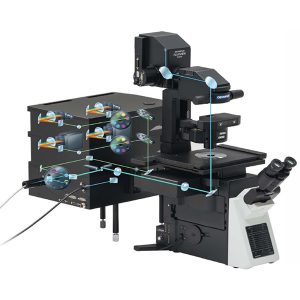
Laser scanning Confocal Microscopy (LSCM) is used in biological research to obtain high-resolution, high-contrast imagery of a sample. Laser microscopes can scan samples point by point, resulting in optical sectioning that can be used to construct precise 3D imagery. Laser scanning microscopes are designed with a large range of imaging modalities to meet some of the most difficult challenges in the life sciences. The FLUOVIEW FV3000 series of confocal laser scanning microscopes meets some of the most difficult challenges in modern science. Featuring the high sensitivity and speed required for live cell imaging as well as deep tissue observation, the FV3000 confocal microscope enables a wide range of imaging modalities, including macro-to-micro imaging, super resolution microscopy, and quantitative data analysis.